Master the Odds: Your Ultimate Guide to Casino Gambling Wins
Casino gambling is a world where luck and strategy meet for a shot at instant excitement. You place a bet on games like slots, blackjack, or roulette, and the outcome decides if you win or lose. The core appeal is the chance to turn a small wager into a big payout, with every spin or card flip keeping you on the edge. It’s simple to start: pick a game you enjoy, set a budget, and play for the thrill of the winning moment.
Decoding the House Edge: The Mathematics Behind Every Wager
Decoding the house edge mathematics reveals why every bet is engineered for the casino’s long-term profit. On a double-zero roulette wheel, that hidden statistical margin comes from the 00 pocket, giving the casino a 5.26% advantage on almost any wager. This math doesn’t mean you cannot win in a single session, but it ensures the odds gradually drain your bankroll over thousands of spins. In blackjack, the house edge shifts based on your decisions; using basic strategy can cut it below 1%, while a poor split or hit can double it instantly. Understanding casino gambling probability transforms you from a passive player into one who recognizes why slot machines pay back less than they take and why craps’ pass line bet is among the fairest options available. Every spin, card, or roll is a fixed mathematical equation you can either respect or ignore.
How probability and statistics shape your odds
In casino gambling, probability and statistics directly define your expected losses by calculating the likelihood of every outcome. Each game’s odds are a fixed ratio of winning events to total possible events, such as a 1-in-38 chance on a single roulette number. The house edge emerges from these probabilities, ensuring the casino pays less than true statistical odds over time. Understanding that past spins or hands do not alter future probabilities is critical, as each event remains independent. Your odds never change based on previous results; they are static, mathematical constraints that determine your long-term win rate through predictable statistical variance.
Why the house always wins over time
The house’s long-term profitability hinges on the mathematical certainty of the house edge, a built-in statistical advantage on every wager. This edge ensures that over thousands of bets, the casino’s expected value remains positive while the player’s is negative. Short-term variance allows occasional wins, but the law of large numbers dictates that actual results converge toward the theoretical edge, steadily eroding player bankrolls. This is why the house always wins over time: the math is immutable, not a matter of luck. The cumulative house edge guarantees systematic profit for the casino.
Q: Why does the house always win over time despite players having winning streaks?
Winning streaks are short-term volatility, but the house edge—a fixed percentage taken from each bet—accumulates across millions of wagers, overriding random fluctuations and ensuring net profit for the casino.
Common miscalculations players make about randomness
Many players assume a losing streak means a win is “due,” which is a classic miscalculation because each spin or hand is independent. This belief fuels chasing losses, where you bet bigger after a run of bad luck. Another common error is thinking short-term results reflect the true odds, ignoring that randomness creates clumps. Players also misjudge the gambler’s fallacy, falsely believing past outcomes influence future ones in games like roulette or slots.
Each event stands alone—randomness has no memory, meaning a streak doesn’t guarantee a payout.
Slot Machines: Random Number Generators and Payout Percentages

Every spin on a modern slot machine is determined by a Random Number Generator (RNG), a computer chip that continuously cycles through thousands of number sequences per second. When you press spin, the RNG stops and maps that precise number to a specific symbol combination, making each outcome completely independent of previous spins. Payout percentages, also known as Return to Player (RTP), represent the theoretical long-term payback from the machine, typically ranging from 85% to 98%. Q: Does a higher payout percentage guarantee I will win more on a single session? A: No, because RTP is calculated over millions of spins; short-term results are governed entirely by the RNG’s random variance.
Understanding return-to-player rates and volatility
Understanding return-to-player rates and volatility helps you choose slots that match your bankroll and play style. RTP, expressed as a percentage, indicates the theoretical long-term payback—a 96% RTP returns $96 for every $100 wagered, though short-term results vary wildly. Volatility measures risk: low volatility offers frequent small wins, while high volatility delivers rare but larger payouts. Pairing a high-RTP slot with high volatility can still drain your funds quickly if you aren’t prepared for dry spells. Always check a game’s RTP in its info screen before spinning.
RTP tells you the house edge over time; volatility tells you the ride—pick both to fit your risk tolerance.
Progressive jackpots and their hidden mechanics
Progressive jackpots are networked prize pools that grow with every losing spin across linked machines. The hidden mechanics of progressive jackpots involve a tiny fraction of each wager—typically 1% to 2%—being diverted from the RNG-driven base-game payout to feed the top-tier award. This reduction in the base RTP (Return to Player) makes the standard slot significantly less volatile in your favor, as you’re consistently losing more per spin to fund a remote, high-level prize. The RNG itself still dictates win frequency, but the real odds of hitting the progressive are often astronomically low—sometimes millions to one—yet the casino precisely splits that extra house edge across all connected players.
Progressive jackpots are a shared-cost, high-reward gamble: your per-spin RTP is reduced to fuel a prize the RNG rarely awards, making the house’s edge far larger on standard play.
Myths about hot and cold machines debunked
A common myth in casino gambling is that slot machines run in cycles of “hot” or “cold” streaks. This is false. Each spin is an independent event governed by the Random Number Generator (RNG), which ensures no outcome affects the next. A machine that has not paid out for hours has the same probability of hitting a jackpot as one that just paid. The concept of a due payout is a persistent fallacy. To debunk this, remember: RNG outcomes have no memory.
- The RNG generates thousands of numbers per second, even when idle.
- Winning or losing a spin does not alter the RNG’s future sequences.
- A “cold” machine is never “due” for a win; each spin is a fresh, random trial.
Table Game Strategies: Where Skill Meets Chance
The felt table is a stage where the player’s will meets the wheel’s spin. In blackjack, you stare down a seven, counting the cards already gone, choosing to hit on 16 while knowing the odds are razor-thin. That is the moment where skill meets chance—you cannot control the deck’s shuffle, but your decision on that single hand can shift the house edge. Craps works the same: you learn the probability of a seven-out and place your bets accordingly, yet the dice still tumble without loyalty. The thrill comes from mastering the rules just enough to tip those odds, but the final outcome always belongs to luck’s whim.
Basic blackjack strategy for reducing the house advantage
Mastering basic blackjack strategy is the most direct method to slash the house edge to under 0.5%. This mathematically proven chart dictates every play—hit, stand, double, or split—based solely on your hand versus the dealer’s upcard. For instance, always stand on hard 17 or higher, and double down on 11 against a dealer’s 2–10. Deviating for intuition erases your advantage. Does basic strategy guarantee wins? No, but it minimizes long-term losses by optimizing decisions. Strictly following the chart turns blackjack from pure luck into a controlled, low-edge game.
Roulette betting systems and why they fail
Roulette betting systems like the Martingale or Fibonacci promise to overcome the house edge by adjusting wagers based on previous losses, but they fundamentally fail because each spin remains an independent event. No strategy can change the fixed probability of the ball landing on red or black. The core flaw is the fallacy of independent trials, where past outcomes do not influence future results. Even a finite bankroll will inevitably encounter a streak that exceeds the system’s betting limits, causing catastrophic loss. These systems merely alter the timing of risk, not the underlying mathematical disadvantage players face.
Roulette betting systems fail because they cannot alter the game’s fixed odds, and their reliance on progressive betting is destroyed by table limits and the player’s finite bankroll against infinite variance.
Craps odds and the best bets to make
In craps, the optimal strategy hinges on exploiting the lowest house edge bets. The Pass Line and Come bets, backed by maximum free odds, offer a negligible house advantage, turning the odds into a true 1:1 bet with no vig. Avoid the high-risk “Proposition” bets in the center, which carry massive double-digit house edges. Stick to Place bets on the 6 or 8 for a strong, direct wagering play that pays 7:6 with a moderate 1.52% edge.
- Always take maximum “Free Odds” behind a Pass or Come bet to reduce the house edge to near zero.
- Bet the 6 and 8 directly for consistent payouts with a 1.52% house edge.
- Avoid “Any 7” and “Hardways” bets, which have house edges exceeding 9%.
Bankroll Management for Sustained Play
The felt felt cold under my fingers, a stark reminder that my initial flurry of wins was already a ghost. The key to staying in the game wasn’t luck, but bankroll management for sustained play. I had sliced my total bankroll into tiny, survive-able portions for each session—cash I could lose without flinching. Sticking to that meant chasing a loss was never an option, only walking away when the pre-set limit hit.
Pro players don’t try to win big; they only try to last long enough for the math to slightly favor them.
I learned that protecting the principal is the only bet that must never be lost.
Setting loss limits and win goals before you sit down
Before engaging in any casino game, you must define your loss limit and win goal. This rigid boundary ensures you leave before your bankroll is depleted or you give back your profits. For sustained play, predetermined stop-loss thresholds are non-negotiable; decide the maximum dollar amount you are willing to lose and walk away the moment it is hit. Similarly, set a specific win target—often 20–50% of your session bankroll—and cash out immediately upon reaching it. This practice forces discipline, as the emotional urge to continue winning can quickly cascade into reckless betting. Adhering to these pre-set numbers removes decision fatigue and protects your capital for future sessions.
The 1-3-2-6 system and other money management approaches

The 1-3-2-6 system is a positive progression strategy where you increase bets after wins in a specific sequence: one unit, three units, two units, then six units. If you win all four steps, the cycle resets, securing a profit of six units. A loss at any stage forces a return to the starting one-unit bet, capping potential losses. This approach contrasts with the Martingale, which doubles after losses, risking large bankrolls for a small gain, or the Paroli, a simpler three-step double-up. The core weakness in these money management approaches is that they cannot alter the house edge; positive progression betting systems only manage volatility, not probability.
Avoiding the gambler’s fallacy with your bankroll
The gambler’s fallacy—believing past outcomes alter future probabilities—destroys disciplined bankroll management. After a losing streak, you might increase bets to “recover,” assuming a win is due; after wins, you might bet smaller, fearing a correction. Both actions violate the reality that each spin or hand is independent. To avoid this, adhere to fixed bet sizing regardless of prior results. Your bankroll plan must be based on expected probability, not a perceived “debt” from losses or a “surplus” from wins. Only by ignoring the fallacy can you protect your bankroll from emotional, irrational swings.
Online Versus Land-Based: Key Differences in Experience
The core difference between online and land-based casino gambling is the sensory immersion versus sheer convenience. In a brick-and-mortar venue, the experience is a physical event, dominated by the clatter of chips, the ambient noise, and the palpable tension at a blackjack table. Online, the experience is hyper-efficient, letting you switch between slots and roulette in seconds without waiting for a seat. Land-based play demands social interaction, forcing you to read dealers and opponents face-to-face, while online gambling offers absolute privacy, allowing you to play in sweatpants. *Yet, this solitude removes the psychological pressure of a live audience, making it easier to chase losses without external judgment.* Ultimately, the land-based experience is about performance and atmosphere, whereas the online realm prioritizes speed and control over your immediate environment.

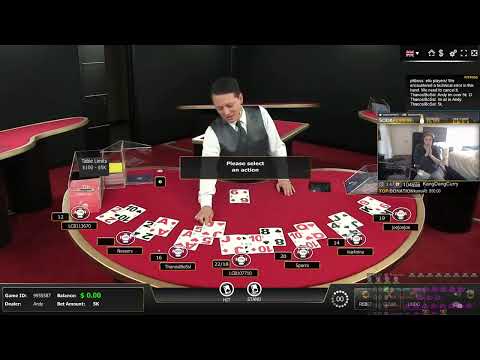
Live dealer games and digital RNG platforms compared
Live dealer games bridge the gap by streaming a real human croupier, replicating the land-based social rhythm, while digital RNG platforms rely on algorithms to deliver instant, isolated spins. The core comparison revolves around authenticity versus speed: a live roulette table forces you to wait for real card shuffling, whereas an RNG slot machine resolves bets instantly. For players seeking bluff-reading or table etiquette, the live feed is irreplaceable; for those valuing rapid play and uninterrupted RNG action, digital platforms dominate.
- Live dealer games introduce real-time human interaction and physical card handling; RNG platforms use computer algorithms for immediate results.
- Speed of play differs significantly: live games follow a human-paced dealer, while RNG games allow rapid, back-to-back rounds.
- Trust perception varies—live streams offer visual transparency, whereas RNG builds confidence through certified random number generation.
Bonuses, comps, and loyalty programs in the virtual space
Online casinos leverage virtual loyalty incentives to create a frictionless reward ecosystem that land-based venues cannot replicate. Digital platforms automatically track every wager, crediting comps such as free spins or cashback without requiring a physical card or player interaction. Bonuses, including welcome matches and reload offers, are delivered instantly via prompts, while tiered loyalty programs grant escalating perks like higher withdrawal limits or exclusive tournament access, all processed through automated algorithms rather than manual verification.
Regulatory variations across jurisdictions
The shift from a land-based casino to an online platform immediately confronts you with regulatory variations across jurisdictions. In a physical casino, you walk through one door governed by local laws; online, the laws of your physical location and the server’s location collide. A game perfectly legal in the UK might be blocked in Australia, while a payment method accepted in Canada could trigger a violation in Germany. This patchwork forces you, not the casino, to track your own legal standing. Some jurisdictions require you to verify your geolocation before each session, while others impose strict deposit caps. Unlike the uniform rules of a Vegas floor, the online world changes depending on the IP address you connect from.
| Aspect | Land-Based | Online (Varies by Jurisdiction) |
|---|---|---|
| Rule Set | Fixed, local laws | Fragmented across regions |
| Player Obligation | None (venue is compliant) | You must verify your own legality |
| Access Barriers | Physical entry | Geo-blocks, ID checks per region |
Psychology of Wagering: Why People Keep Playing
Casino gambling leverages the variable ratio reinforcement schedule, where unpredictable wins trigger dopamine release, making the behavior highly addictive. Players often fall victim to the near-miss effect, interpreting losses that almost win as signs of imminent success. The illusion of control, such as choosing a slot machine or dice outcome, keeps players engaged despite clear house odds. A gambler’s fallacy leads them to believe past outcomes influence future results, like assuming a blackjack loss streak means a win is “due.” Chasing losses becomes a compulsive loop, as the brain’s reward system prioritizes the possibility of recouping losses over rational assessment of diminishing returns.
The role of near-misses and dopamine release
In casino gambling, a near-miss—where the outcome falls just short of a win—triggers a disproportionate release of dopamine in the brain’s reward pathway. This neural response, nearly identical to that of an actual win, reinforces the behavior by signaling that a successful outcome is close. The phenomenon creates a powerful illusion of control and skill, compelling players to continue wagering despite overall losses. Programmed near-misses in slots directly exploit this dopamine surge, making the illusion of near-wins a primary driver of persistent play. This biochemical reaction fundamentally overrides rational loss assessment, keeping the gambler engaged in the cycle.
Anchoring bias and chasing losses explained
Anchoring bias hooks you when you fixate on your initial bet, like a $100 loss, making later decisions feel smaller by comparison. This skewed reference point fuels chasing losses in casino gambling, where you throw good money after bad trying to break even. You ignore the actual odds, convincing yourself a win is just around the corner. The more you chase, the deeper the hole gets, as each loss anchors you further from rational play.
Anchoring bias twists your view of losses, and chasing losses traps you into betting more to recover what’s already gone.
Environmental triggers in-floor design and screen layouts
Environmental triggers in in-floor design and screen layouts exploit compulsive flow states by removing temporal and spatial cues. Casino carpets’ intricate patterns obscure time passage, while curved pathways block exit sightlines, encouraging deeper penetration into casinous the gaming floor. On screens, rapid spin animations and near-miss displays on the payline create false patterns of impending success, overriding rational loss assessment. Button placement mimics slot-machine ergonomics, reducing decision latency between wagers. These sensory manipulations work together to sustain continuous play loops.
- Labyrinthine aisle layouts conceal clocks and windows, disrupting natural time perception.
- Screen interfaces use bright, strobing reward sequences to trigger dopamine release during losses disguised as wins.
- Flooring patterns with repeated low-contrast motifs reduce visual orientation, disorienting players’ spatial memory.
Responsible Participation and Recognizing Problematic Behavior
Responsible participation in casino gambling starts with setting strict time and money limits before you play, treating any loss as the cost of entertainment. Recognizing problematic behavior means watching for red flags like chasing losses, lying about your play, or feeling restless when you cannot gamble. A key question to ask yourself is: Am I gambling to have fun or to escape problems? If the answer is the latter, step away immediately. Healthy gamblers celebrate small wins and walk away, while problematic patterns involve increasing bets to feel the same thrill. Always gamble with money you can afford to lose, and never borrow funds to continue playing.
Warning signs of unhealthy engagement
Ignoring predetermined spending limits and chasing losses to recover money are primary warning signs of unhealthy engagement. A compulsion to gamble for longer than planned, along with lying about time or money spent at the casino, indicates a loss of control. Other red flags include feeling restless or irritable when not gambling, and using gambling as a way to escape stress or anxiety. Overvaluing near-misses as skill rather than luck is another critical indicator of problematic behavior.
Tools for self-exclusion and time limits
For casino gamblers, self-exclusion tools allow you to permanently or temporarily ban yourself from specific platforms, often enforced via identity verification upon login or deposit attempts. Time-limit tools cap daily, weekly, or monthly session durations, triggering automatic logout once the preset threshold is reached. Effective use of both tools requires proactive configuration before any gambling session begins, as they remain irreversible until the lockout period expires. Key practical steps include:
- Activating the “reality check” pop-up timer to receive on-screen reminders every 15–30 minutes.
- Registering for a cross-casino self-exclusion program (e.g., GAMSTOP, OASIS) to block access across multiple sites simultaneously.
- Setting deposit limits in tandem with time limits to prevent high-speed wagering during short sessions.
- Using cooling-off periods of 24–72 hours after a loss to enforce a mandatory break without full exclusion.
Where to find support for compulsive habits
For casino gamblers, immediate support for compulsive habits is accessible through national helplines like the National Problem Gambling Helpline (1-800-GAMBLER), which provides 24/7 crisis intervention and local treatment referrals. Self-exclusion programs, offered directly by casinos and state gaming authorities, allow you to voluntarily ban yourself from all gambling venues and online platforms. The Gamblers Anonymous network runs free, peer-led meetings in most regions where attendees share strategies for managing urges. Cognitive behavioral therapy (CBT) specialists, often listed through local mental health directories, deliver structured techniques to disrupt compulsive cycles. Each avenue functions as a discrete point of entry, enabling you to select the level of privacy and intensity you need.
Support for compulsive gambling habits is found through crisis helplines, casino self-exclusion programs, Gamblers Anonymous meetings, and cognitive behavioral therapy practitioners.
Legal Landscape and Licensing Across Borders
When crossing borders for casino gambling, the legal landscape shifts dramatically, requiring you to verify that a platform holds a valid license from the jurisdiction where you are physically located. Your legal risk depends on your current location, not the casino’s host country. A license from Malta, the UK, or Curaçao does not protect you if your home government blocks or penalizes offshore play. Always confirm the operator’s printed license number against that regulator’s official database before depositing, as rogue sites fake credentials to exploit jurisdictional gray zones. Playing without this cross-border verification exposes your funds to seizure and voids any legal recourse.
Federal versus state-level regulations in the United States
When you gamble in the U.S., federal versus state-level regulations create a patchwork you must navigate. Federal law, like the Wire Act, mostly bans interstate sports betting, leaving states to decide their own casino rules. This means traveling across a state line can change what games or sites are legal. State laws govern everything from which card games are allowed to how much you can bet, while federal agencies only step in for serious crimes like money laundering.
Federal law sets broad limits, but each state decides if and how casinos operate within its borders.
Offshore operators and legal gray areas
Offshore operators exploit legal gray areas by basing servers in jurisdictions where online casino gambling is unregulated or ambiguously defined, allowing them to accept players from countries with stricter laws. This creates a practical dilemma: your deposits and winnings exist in a regulatory vacuum, meaning local consumer protections seldom apply. If an offshore casino refuses a payout, pursuing legal recourse typically requires navigating foreign courts with unclear jurisdiction. Players rely entirely on the operator’s reputation rather than enforceable guarantees, making dispute resolution a gamble in itself.
Offshore operators thrive in legal gray areas, leaving players with no local safety net and full responsibility for picking trustworthy sites.
Tax implications of winnings and losses
For casino gamblers, accurate record-keeping of winnings and losses is non-negotiable for tax compliance. Winnings—from slots, tables, or poker—are fully reportable as income, regardless of whether you receive a W-2G form. Losses are deductible only if you itemize, and strictly to the extent of your winnings; you cannot write off more than you won. Retain all session logs, receipts, and statements to substantiate claims. Failing to report triggers audit risk and penalties, while proper documentation maximizes your allowable deduction.
Q: Are my gambling losses deductible against other income?
A: No. You cannot deduct losses in excess of your total reported gambling winnings for the year. Losses offset only the exact amount you won.
Future Trends: Cryptocurrency, VR, and Skill-Based Games
You slide on the VR headset, the casino floor materializing around you with the clatter of chips and distant slot chimes. Your digital wallet, loaded with cryptocurrency, pays for the buy-in instantly, no ID or bank delays. Across the virtual felt, you challenge a poker bot whose strategy adapts to your every tell—this is a skill-based game, where understanding game theory and reading opponents matters more than luck. To win, you must outplay both the algorithm and the players.
Real context: players are now grinding leaderboards for crypto jackpots, treating these VR pits as competitive esports, not just gambling.
Your win is paid out in Bitcoin before you remove the headset, the transaction recorded on the blockchain, irreversible and anonymous.
Blockchain transparency in provably fair systems
Blockchain transparency revolutionizes trust in casino gambling by replacing opaque RNGs with a fully auditable provably fair system. Every bet, spin, or card draw is cryptographically recorded on the ledger, allowing you to independently verify the outcome’s randomness and integrity immediately. Instead of relying on a casino’s word, you access the server seed, client seed, and nonce for each wager. The sequence to verify fairness is:
- Obtain the server’s hashed seed and your client seed before the result.
- After the game, receive the unhashed server seed to confirm no tampering occurred.
- Combine the seeds and nonce through an open algorithm to reproduce the exact outcome.
This direct, verifiable transparency eliminates any shadow of doubt, making every round functionally self-auditing.
Virtual reality environments redefining immersion
Virtual reality environments redefine immersion by replacing flat screens with fully navigable 3D casino floors where players physically walk to tables and pick up chips. Spatial audio and haptic feedback simulate real crowd noise and card textures, making digital interactions feel tactile. Presence-driven gameplay eliminates the barrier between player and game, as eye-tracking allows non-verbal bluffing in poker or direct eye contact with a virtual dealer. This spatial continuity forces players to rely on authentic reading of opponents rather than interface prompts. The environment’s lighting and reflections respond to in-game events, deepening emotional investment.
By merging physical movement with responsive digital space, virtual reality environments transform gambling from screen-based clicks into embodied experiences where every glance and step carries weight.
Esports betting and gamification of chance
Esports betting transforms casino engagement by replacing spinning reels with real-time wagers on competitive gaming matches. Players stake on specific in-game events, such as first blood or tower destruction, rather than random number outcomes. Gamification of chance then blurs skill and luck further through loot box mechanics tied to bet outcomes, where winning a wager might unlock cosmetic rewards or entry into high-stakes virtual tournaments. This creates a layered risk where users simultaneously gamble on match performance while chasing randomized prize pools, merging prediction markets with variable-reward loops directly within the casino interface.
What Exactly Is Casino Gambling and How Does It Work?
The Core Mechanics Behind Every Bet You Place
Understanding House Edge and Why It Matters to You
How Random Number Generators Keep Games Fair